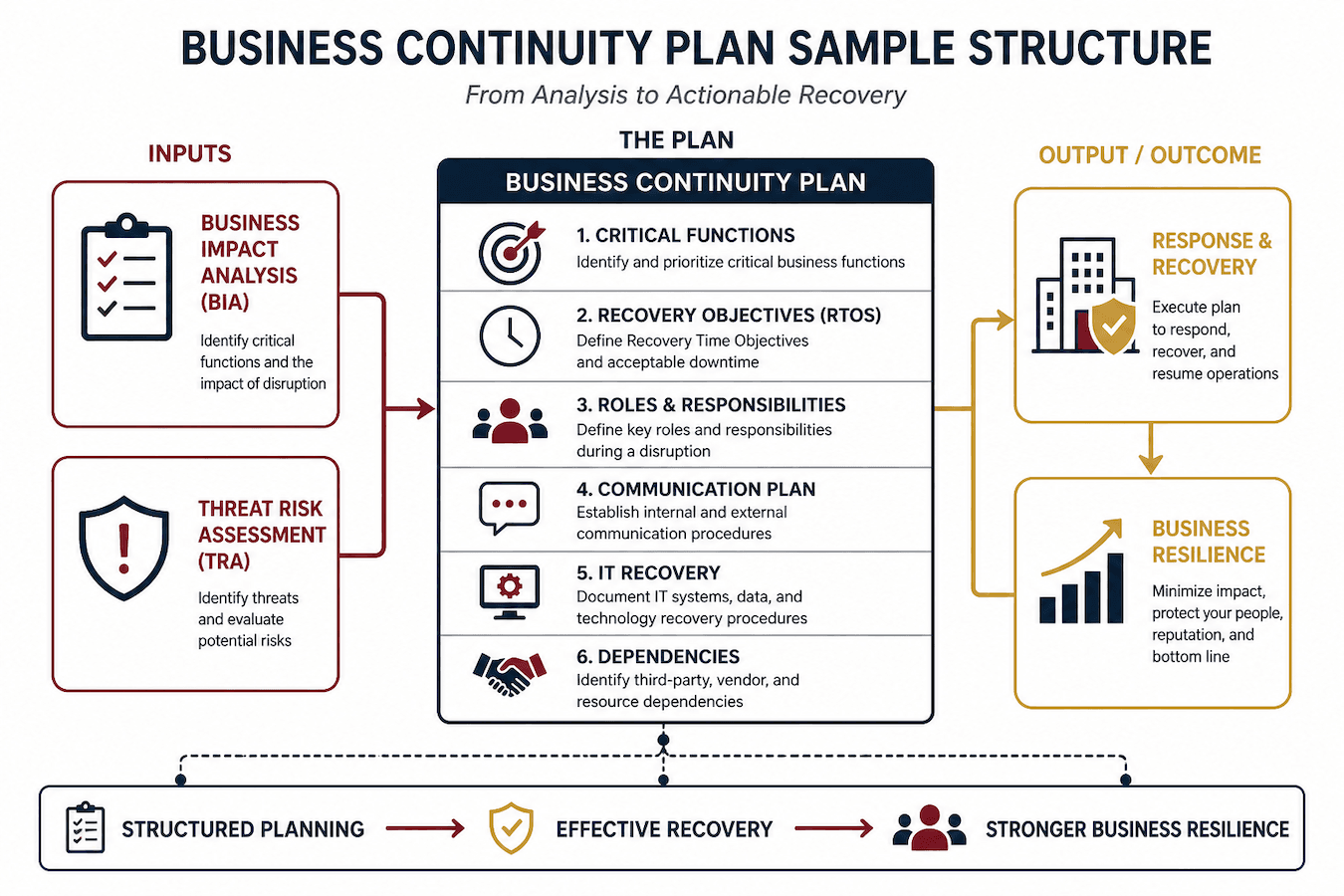
A business continuity plan (BCP) sample shows what a completed BCP should look like before you build your own. Instead of starting from scratch, you can review how recovery strategies, communication procedures, and operational dependencies are structured in a practical plan.
This page explains what a BCP sample includes, how to use one properly, and how to turn a basic example into a complete, working solution.
A sample becomes much more useful when it is supported by a threat risk assessment and a clear business impact analysis.
For a broader preparedness reference, Ready.gov also outlines the core elements of business continuity planning.
If you want more than a static example, SHIELD business continuity planning software gives teams a complete, customizable sample plan they can adapt, maintain, and improve over time.
A useful business continuity plan sample reflects how an organization actually operates during a disruption. It should include:
If these elements are missing, the sample won’t translate into a usable plan.
The purpose of the sample is to show how these pieces work together, not to create a document that looks complete but fails during an incident. A useful BCP connects the risk assessment, business impact analysis, recovery priorities, roles, procedures, communications, and maintenance activities into one practical recovery tool.
A BCP sample and a BCP template serve different purposes:
Most organizations need both. The sample provides context, while the template is what you use to build your plan.
A sample should guide your approach—not be copied directly.
Use it to:
Then adapt everything. Your organization’s risks, systems, and priorities are different.
Organizations often misuse BCP samples. Common issues include:
A sample is a starting point—not a solution.
A sample helps you understand structure. A complete plan requires analysis and customization.
A typical 5 step process includes:
Static documents and generic samples don’t hold up during real disruptions.
KingsBridgeBCP SHIELD provides a structured platform to build, manage, and maintain your business continuity plan:
A BCP sample is an example of a completed or partially completed plan that shows how recovery strategies, roles, and procedures are documented.
It should include critical functions, recovery priorities, communication procedures, IT recovery steps, dependencies, and testing processes.
No. A sample shows the end result. A template is what you fill out.
Yes, but it must be customized. A generic plan will not work during an actual disruption.
Yes, but most free samples are generic. A structured framework is more effective for building a usable plan.
At KingsBridgeBCP, we provide Business Continuity Planning solutions that cater to businesses of all sizes. Our SHIELD software packages, from SHIELD - Free to SHIELD - Platinum, offer the right fit for everyone, combining industry expertise and best practices to ensure you’re always prepared. Whether you’re looking for software or services, we’ve got you covered with tailored solutions that deliver exceptional value and peace of mind. Explore our range of BCP software and services today to discover how KingsBridgeBCP can help you safeguard your business.
